
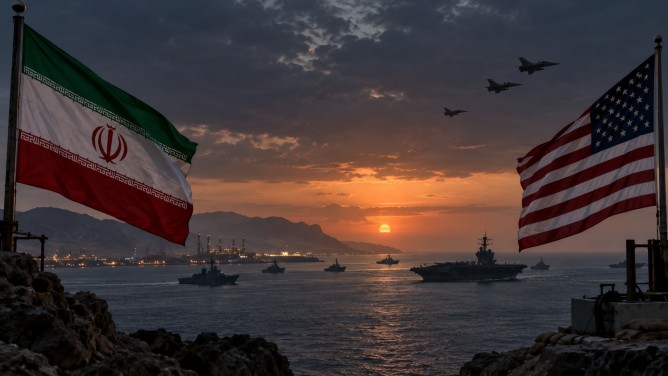
Tensions across the Middle East have taken a sharp turn as the United States and Iran exchange heated threats, further straining regional security. This escalation comes amid heightened conflict involving multiple parties, including the Houthi movement’s increased military activities against Saudi Arabia. As the situation intensifies, U.S. President Donald Trump has urged Iran to engage in negotiations, cautioning Tehran about severe repercussions if it declines dialogue.
Despite the adversarial rhetoric, President Trump has shown a willingness to meet with Iranian President Masoud Pezeshkian at the United Nations General Assembly in New York. This potential diplomatic overture offers a glimmer of hope amidst the ongoing confrontation, suggesting that channels for dialogue remain open even as tensions rise.
Iranian military officials have issued stark warnings, asserting that any further U.S. attacks would provoke retaliation targeting American bases and interests in the region. They also cautioned that nations supporting a U.S. offensive could be considered as participants in the conflict. Additionally, Iran continues to link the strategic reopening of the Strait of Hormuz to broader negotiations and conflict conditions, a critical point given the strait’s significance for global energy supplies.
Meanwhile, the conflict’s regional dimensions are underscored by the Houthi movement’s recent claims of missile and drone attacks on Saudi Arabian targets, including in Riyadh and at an oil facility in Yanbu. Saudi authorities reported intercepting a missile aimed at Riyadh and successfully thwarting other attacks. The escalation by the Houthis, who are active around Yemen’s Red Sea coast and the Bab el-Mandeb Strait, has heightened risks for commercial shipping and exacerbated concerns over energy market stability.
The ongoing disruptions in the region have impacted oil shipments, contributing to fluctuating energy prices. However, oil prices saw a slight decrease on September 21 as markets considered the possibility of renewed diplomacy and a partial rebound in Saudi exports. As the situation continues to develop, regional and global stakeholders remain vigilant, assessing the potential for both conflict and diplomatic resolution.