
Western horizons hold special significance across many cultures, often associated with death due to the setting sun’s apparent descent into darkness. Cornwall’s Land’s End peninsula intensifies these associations through its geography—Britain’s southwestern extremity pointing directly toward winter solstice sunset. The Isles of Scilly, positioned precisely where the midwinter sun descends, may have been understood by prehistoric communities as dwelling places for the dead or gateways to supernatural realms.
From Tregeseal stone circle, these islands manifest as flickering presences. On clear days they appear close and detailed; in other conditions they vanish completely. This instability creates impressions of a realm existing between worlds—visible yet intangible, present yet absent. Such qualities would have resonated powerfully with cosmological beliefs about death and the afterlife.
Archaeological evidence suggests Neolithic peoples held sophisticated beliefs about death and the dead’s continued participation in community life. Burial practices including chambered tombs positioned to witness astronomical events indicate the dead weren’t simply deposited and forgotten but were understood as maintaining relationships with the living and with cosmic patterns.
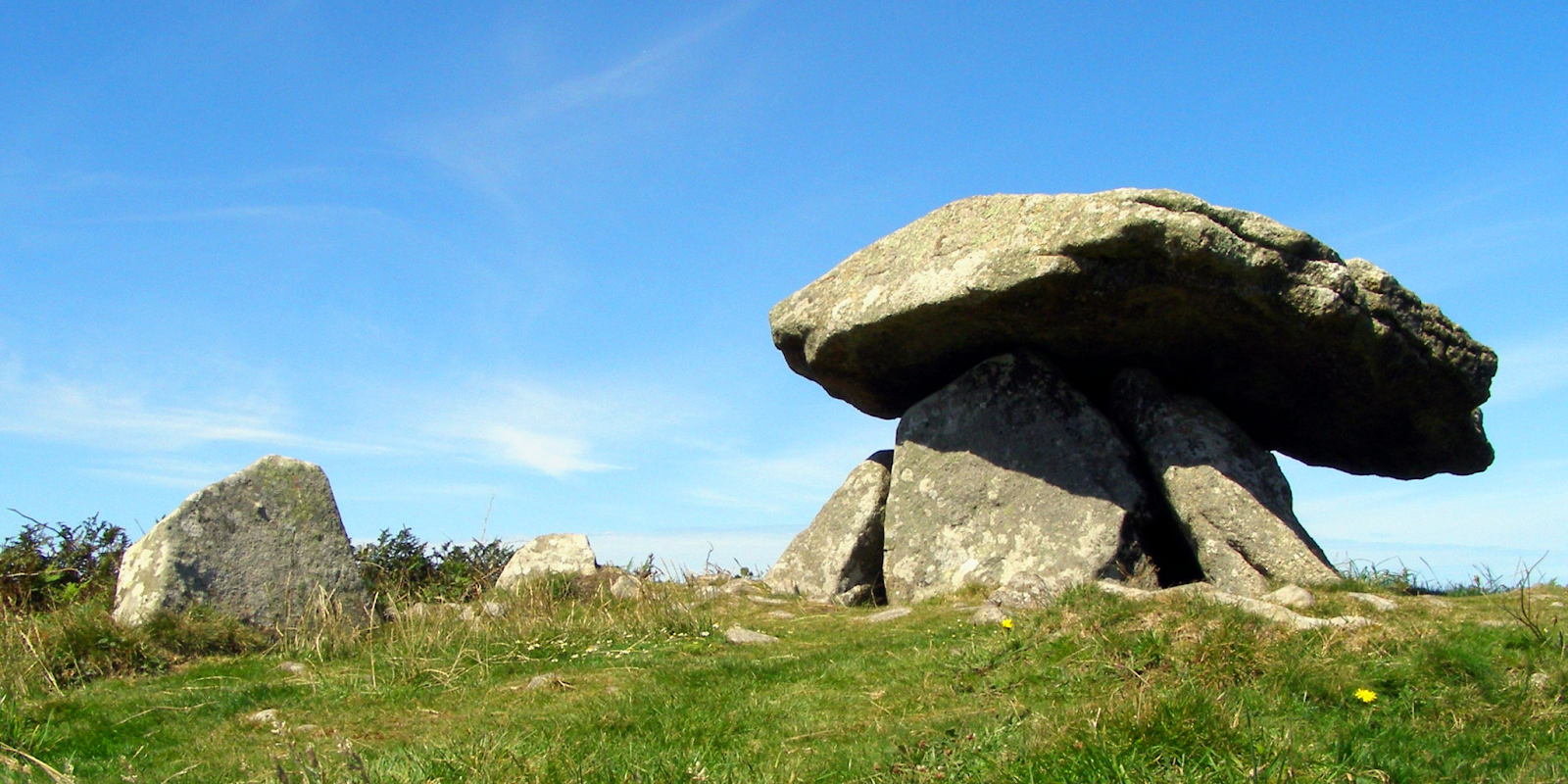
Chûn Quoit exemplifies this integration. The chambered tomb functions simultaneously as burial place and astronomical observation point, positioning the dead to maintain eternal watch over winter solstice sunset behind Carn Kenidjack. This dual purpose suggests beliefs about the dead’s ongoing involvement with seasonal cycles and solar movements that structured agricultural life.
The winter solstice held particular significance within these belief systems. As the moment when darkness reached maximum before the sun’s turning, it represented a threshold when boundaries between life and death, physical and spiritual realms, might become permeable. Rituals conducted at monuments like Tregeseal could have involved invoking ancestors, seeking their guidance through winter’s harshness, or celebrating cosmic renewal that promised eventual warmth and growth. Modern celebrations maintain these themes through the Montol festival’s ritual sun burning and torch-lit processions to the sea, demonstrating how Cornwall’s prehistoric heritage continues inspiring contemplation of death, renewal, and the eternal cycles that transcend individual human existence.