
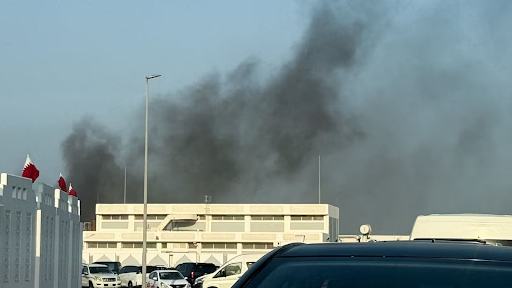
The choice of Doha as the location for Israel’s most daring assassination strike in recent memory was a deeply strategic one, designed to send a multifaceted message to Hamas, Qatar, and the entire world. The attack was not just about who was targeted, but where they were targeted, making the city of Doha itself a central part of the operation’s psychological impact.
First, striking in Doha demonstrated the reach and superiority of Israeli intelligence. To successfully execute a precision attack in the capital of a well-resourced Gulf state, far from its own borders, showcases a formidable capability meant to intimidate its adversaries. It tells Hamas that no location, no matter how seemingly secure or diplomatically protected, is beyond Israel’s grasp.
Second, the location was a direct rebuke to Qatar’s policy of hosting Hamas. It was a violent rejection of the idea that Doha could serve as a neutral ground, effectively punishing the mediator for providing sanctuary to Israel’s enemies. The strike forces Qatar to confront the risks of its foreign policy, challenging its ability to play both sides of regional conflicts.
Finally, carrying out the attack during ceasefire talks in Doha was a clear signal of Israel’s priorities. It showed that the government’s commitment to dismantling Hamas’s leadership superseded its commitment to the diplomatic track that Qatar was hosting. The city was chosen not in spite of the talks, but because of them, maximizing the disruptive and symbolic power of the attack.