
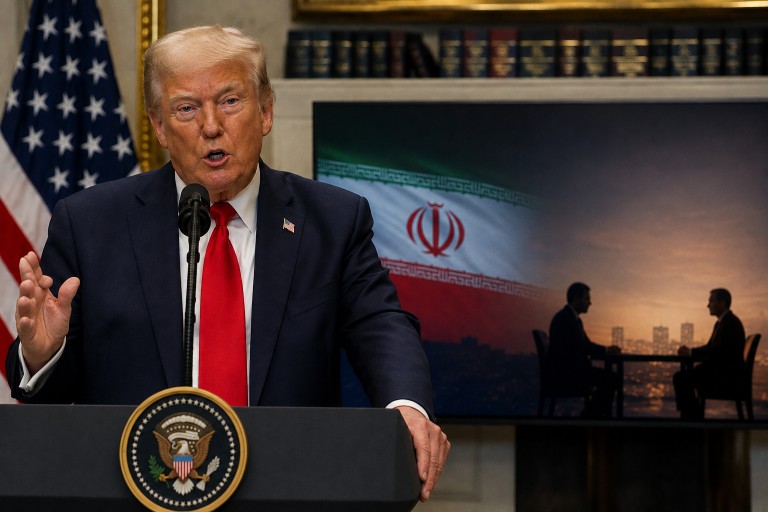
Amid escalating tensions, President Donald Trump announced that a planned military strike on Iran was called off at the last minute. The decision came after receiving indications that negotiations were nearing a framework agreement aimed at reopening the Strait of Hormuz and addressing various concerns regarding Iran’s nuclear ambitions. According to Trump, the move was influenced by requests from several Middle Eastern countries, including support from Israel, which favored averting military conflict.
Contradicting Trump’s statement, Iran dismissed claims that it had requested the military action be halted, labeling them as false. Iranian officials emphasized that their military remains on high alert and warned that any aggression from the United States or Israel would provoke a robust response. They noted that potential retaliatory measures could include targeting regional energy infrastructure, raising the stakes in an already volatile situation.
The Strait of Hormuz, a critical chokepoint for global oil shipments, has been at the center of these rising tensions. Disruptions in shipping through this narrow passage have kept global energy markets anxious, with concerns mounting over the stability of oil supplies and regional security. The strait’s strategic significance is underscored by its role as a transit point for a significant portion of the world’s oil exports, linking energy-rich Gulf countries to international markets.
Both the United States and Iran have had strained relations for years, primarily due to disagreements over Iran’s nuclear program, which Tehran insists is for peaceful purposes. However, the U.S. and its allies have long suspected that Iran’s nuclear ambitions might have military dimensions, leading to a series of economic sanctions and diplomatic efforts aimed at curbing its nuclear activities.
As the international community closely monitors the situation, the potential for escalation remains high. The ongoing diplomatic efforts, coupled with the possibility of military confrontations, highlight the complexity of the geopolitical landscape in the Middle East. While some progress appears to have been made, the path to a comprehensive resolution remains fraught with challenges and uncertainties.