
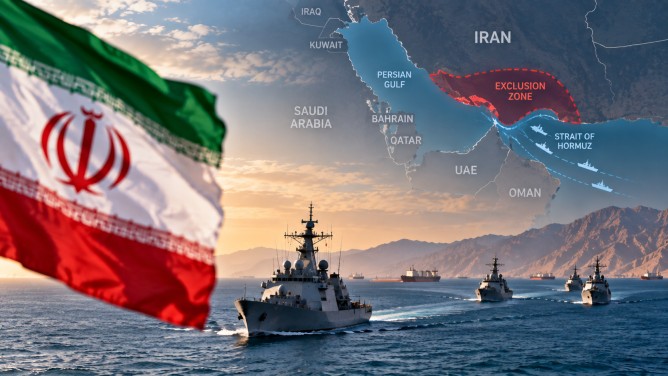
Iran has announced intentions to create a new “exclusion zone” close to the Strait of Hormuz, a vital corridor for international oil and gas traffic. Mohsen Rezaei, recently appointed as the head of Iran’s Supreme National Security Council, specified that this zone would stretch from the vicinity of the U.S. naval blockade towards the Strait of Hormuz and extend into the Arabian Gulf. Iran plans to monitor vessels entering this area, identifying those aiming to navigate through the strait, and potentially placing them on their sanctions list.
This move comes on the heels of heightened tensions marked by a U.S. attack on three Iranian oil tankers, following Iran’s launch of ballistic missiles targeting U.S. naval ships. Further complicating matters, Iran claimed to have struck an unmanned U.S. vessel attempting to enter the strait, a claim that has been contested by American military officials.
The Strait of Hormuz is a crucial passage for global energy supplies, and any disruptions here could significantly impact energy prices and the broader global economy. In response to the current friction, the United States has bolstered its naval presence to enforce a blockade on Iranian ports, aiming to hinder Iran’s oil exports. This military maneuver is part of a broader strategy of applying economic pressure on Iran, especially after diplomatic negotiations between the two nations fell apart.
Rezaei emphasized that Iran remains open to diplomatic engagement but stressed the need for more robust assurances in any future diplomatic agreements. Talks between the U.S. and Iran have been stalled due to ongoing allegations of breaches by both parties. Despite these frictions, U.S. officials have noted that substantial quantities of oil continue to transit the Strait of Hormuz, aided by naval security and alternative regional pipeline routes.