
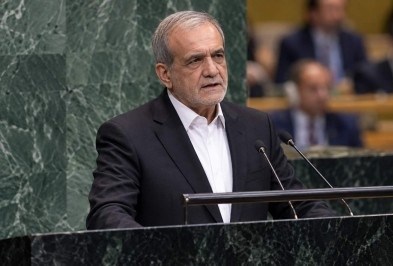
The geopolitical tension between the United States and Iran continues to simmer, with both nations expressing a willingness to engage in dialogue despite significant disputes. These developments unfolded as Iranian President Masoud Pezeshkian addressed the United Nations General Assembly, criticizing U.S. President Donald Trump while emphasizing Iran’s openness to negotiations.
Pezeshkian’s remarks underscored Iran’s readiness for diplomatic talks, provided these conversations are not accompanied by threats or military coercion. This statement came shortly after President Trump hinted at potential further actions against Iran, even as he acknowledged ongoing discussions between the two countries.
On the periphery of the UN General Assembly, a crucial meeting took place between Iranian Foreign Minister Abbas Araghchi and U.S. special envoy Steve Witkoff. The three-hour discussion, facilitated by Qatar, focused on Iran’s stipulations for resolving conflicts and reducing pressure, highlighting the intricate diplomatic dance both nations are engaged in.
The dialogue also touched on Iran’s nuclear ambitions, with Pezeshkian reiterating that Iran seeks a peaceful nuclear program and has no intention of developing nuclear weapons. He urged regional cooperation on security matters, advocating for reliance on local partnerships rather than external powers.
A significant point of contention remains the Strait of Hormuz, a strategic waterway critically important to global shipping and energy markets. Iran has signaled its willingness to ensure the strait’s security, contingent upon the lifting of military and economic pressures, as well as the release of Iranian assets held abroad.
Despite the challenges, the renewed diplomatic efforts suggest a window of opportunity for reducing hostilities. However, Iran continues to face substantial economic strain and impediments to oil exports due to ongoing sanctions and shipping restrictions, which Pezeshkian attributes to aggression from the United States and Israel. The unfolding situation remains delicate, with potential implications for international relations and regional stability.